Wednesday, January 2, 2019

Climbing Mountains

Yes, I made it to the top of Mt Kilimanjaro, 19,340 feet above sea level, but I must admit that success was not certain until the very moment that I arrived there.  In fact, I need to admit/acknowledge up front that I would not have made it without the skilled support of our guide, Wilfred, and the encouragement and companionship of my friend Dan Rayfield.  This was a shared effort, a shared success.

But that's not the mountain climb that I want to share with you now.....

While in route to Kilimanjaro, Dan and I spent a couple of days in Nairobi, Kenya, and there we took a guided "tour" through Kibera, the largest shantytown in the world.  Over a million people pushed together into a space smaller than the OSU campus, very few roads, almost no water, sewer, electricity.  I prepared myself to see and smell endemic poverty, squalor, and human desperation..... and there was plenty of that to see and smell.  But want I didn't expect to see was hope..... and there was some of that too.

The two guys who gave us the tour were born in Kibera, grew up there, and still live there.  They give these tours because they believe that, in doing so, people will begin to see human potential instead of poverty, that those who walk through the narrow paths of Kibera with them will come to believe in the possibility of something different, something better, and maybe even begin to do something to help bring that vision to fruition.  And, on our tour, we were introduced to groups of Kibera's residents who are doing just that.


First, we met a group of about a dozen men who have developed a process for using cattle bones as a substitute for ivory, producing a variety of products that not only provide an income for them and their families but that also help to protect the area's elephants from poaching.  Industrious, entrepreneurial, these men helped me see hope where I might have only seen hopelessness.

Then, we were introduced to a group of women who have contracted AIDS but who, instead of becoming overcome by their circumstances, have used those circumstances to develop a program of education and access to medical resources that is helping to curb the ravages of this disease in a community where it is estimated that more than 20% of the population are HIV positive.  These women fund their efforts though their production of handcrafted jewelry that is then sold throughout the region.

Together, the guys doing the tours, the men producing a substitute for ivory, and the women working to fight AIDS in their community, are overcoming desperation with determination, overcoming poverty in pursuit of their potential.  I may have climbed Kilimanjaro, but these women and men have conquered mountains that make my achievement seem small in comparison.  I was humbled by and in awe of their spirit, their determination.

And all of this makes me mindful of the kinds of "mountains" that many of our students at LBCC must climb in order to achieve their potential.  Economic barriers, medical, mental, and physical challenges, family obligations or limitations, varieties of addictions, basic lack of opportunity.  I have always understood that it is the purpose of our community colleges to help these students overcome these challenges, to successfully climb the mountains that stand in the pathway to their success, but what I came to understand as I walked the paths of Kibera and met with these amazing people, is that our purpose is not just to support their success but to make certain that we all grow because of their success among us.  Like my climb of Mt. Kilimanjaro, our work is a shared effort and our goal is a shared success.  Unrealized human potential is a loss for us all.

If you are interested in learning more about Kibera and these truly amazing people, or perhaps even support their work, here's their contact information.

Kibera Tours
Omondi Fredrik Otieno (Freddy)
Email: info@kiberatours.com
Web: www.kiberatours.com

Power Women Group in Kibera
Email: powerwomeng@gmail.com
Powerwomen254@gmail.com 
Web: https://rising.globalvoices.org/blog/2012/07/10/kibera-power-women-challenging-hiv-stigma/

Victorious VCG
Email: victoriouskibera@gmail.com
Web: www.victoriousbones.com


Monday, November 26, 2018

Leadership and Whitewater Guiding

“A vision is not just a picture of what could be;
it is an appeal to our better selves, a call to become something more.”

- Rosabeth Moss Kanter

Many people know that I earned my Master of Arts degree from a seminary, and it was there that I learned that a critical characteristic of a good minister was the ability to see “what can be” at least as much – and perhaps more than - seeing “what is.”  Well, over the years I’ve come to believe that this is true for a good community college president as well.  In fact, while there are many things that a college president (or president of anything for that matter) is supposed to do, perhaps none is more important than being a believer in and champion of “our better selves.”  Call it “vision,” exceptional predictive analytics, or maybe just good attention to a rapidly changing world, but a big part of my job is to “see” our role in that world and to ensure that we’re prepared to play that role.

This month, at the annual Oregon Community College Association conference, I was honored and humbled to receive the Howard Cherry Administrator of the Year Award.  This award is both unexpected and deeply meaningful to me, and it is a great honor to receive this acknowledgement from my peers in Oregon, people who have contributed so much to the future of education in our state and from whom I have learned and continue to learn so much.  However, let me clarify here what I made clear upon receiving this award: The leadership that was being recognized is, and must always be, a team effort.  Or, to put it more directly, I recognize that I am an “incomplete and imperfect package” and, while I was singled out for an award, there is nothing singular about this work.  Here’s how I explained this in my acceptance speech:

  • I am here because…. I am privileged to work at a college that is somehow able to take who I am and what I do, and turn it into same really amazing things
  • I am here because…. I have a Board that supports me even – and especially – when things get messy
  • I am here because….. I have a leadership team that gathers with me and around me to refine my “visions” into meaningful objectives and strategies to achieve them
  • I am here because…. I have friends who love me even in my incompleteness and imperfection
  • I am here because….. I have a wife who hands me a glass of wine, and patiently waits for me to calm down and reenter into the relationship that has sustained me for 45 years.


In another part of my life, I have served as a whitewater rafting guide and, over the years of serving as both a guide and a president, I have come to believe that the work of a rafting guide is a great analogy for good leadership.  On the river as well as in the college, I’ve learned to always to keep these three guidelines in mind:

  • We’re all in the same boat and that, wherever we go, we will go there together.
  • Everyone has a role, and it doesn’t work unless we work together.
  • And, as the “guide,” I have a unique responsibility and role to play, and that role is to look ahead:
    • To see around the bend, and around the proverbial corners and into the future.
    • To see an ecosystem, where the events of the moment give signs of things to come.
    • AND, when entering the rapids, it’s all about choosing the right point of entry.
In whitewater rafting, and in leading our colleges through turbulent times, choosing the point of entry -- the place to begin -- has an incredibly powerful impact on “how good the ride is.”  Once in the turbulence, navigation can be quite a challenge but, by learning to “read the water,” you can turn the currents from impediment into impetus for the path forward.  By choosing the optimal point of entry, the forces of the river – like the forces of change around us – can become our collaborators and not our foes…and this might be the most important thing I have to offer my college community.  And, with that in mind, I'd like to suggest two “points of entry” for the white waters ahead, and maybe that we’re already in.

Navigating the Career-Technical Bandwagon
There has been a lot of energy and resources behind career-technical education in the recent past, and there appears to be even more to come in our future.  This is good news… but it’s not the whole news.  As John Dewey so often reminded us, education is about more than just making a living.  It’s about the quality and character of life itself and, as COMPREHENSIVE community colleges, I do not think this means that CTE and the Liberal Arts merely cohabitate.  Comprehensive education is something that we need to offer to ALL of our students, regardless of program.  As community colleges, we too are institutions of higher learning.  We ARE NOT “higher education light.”  Instead, we are a more accessible version of the FULL MEAL DEAL.  As such, we need to focus not just on skill development, but on character development as well.  Our graduates need to be more than just good at something… they need to be genuinely good people. This holistic approach to teaching and learning must be our entry point to this work, because the future of our students, our communities, and our country depends on it. 
Navigating toward Equity and Inclusion
Equity is an OUTCOME.  It’s not a value, a strategy, a program, or an initiative.  It means that the same achievements of education and career and life are equally attainable – and actually attained – by all people regardless of race, religion, culture, gender, or economics.  Equity is the Outcome to which free speech, diversity, and inclusion point, and it requires nothing less than a true transformation of our colleges, of OUR community college, and it will not happen naturally as an outgrowth of ubiquitous feelings of charity, but only when it is intentionally, strategically, and persistently pursued….and pursued from the right point of entry.  Let me suggest that the entry point for this work toward Equity is to acknowledge the place from which we begin…..and the place from which I begin. 
I am an old white guy, and the honest truth is that our colleges were built upon the cultural foundation in which old white guys were the standard.  I, our colleges, and most all of us who work at them see ourselves and our work through this cultural lens, and we do not stand a chance of achieving equity unless we acknowledge this.  I am a product and benefiter of White Privilege, and I believe that acknowledging this is the ONLY point of entry that gives us a shot at shifting our colleges off the culturally biased foundations on which they were built.  Robin D’Angelo (who we had on the LBCC campus two years ago and now is a New York Times bestselling author) ends her most recent book, White Fragility, with this observation:
"The default of the current system is the reproduction of racial inequality; our institutions are designed to replicate racial inequality and they do so with efficiency. Our schools are particularly effective at the task. To continue reproducing racial inequality, the system only needs white people to be really nice and carry on, smile at people of color, be friendly across race, and go to lunch together on occasion."
Leadership, like whitewater guiding, is a matter of navigation with the future in mind. The goal is to be there, and to be better, with every moment that the future becomes the present.


The goal is not to be better than the other man, but better than your previous self.

– The Dalai Lama

Thursday, March 22, 2018

Fake News, and the Role of Education

A while back, I read a Letter to the Editor in my local newspaper deriding the paper for its biased coverage of the news. The writer went on the accuse the paper of  presenting "Fake News," defining that label as the practice of giving emphasis to or being selective in the presentation of events so as to assign or support a certain understanding of, or conclusions about, those events. The writer then went on to demand that the news be presented objectively, without bias, so that he, and he alone, could then then determine for himself the meaning and significance of the events being presented.

Where do I begin??????

Neil Postman, that great commentator and critic of American culture has warned that the most dangerous program on television is the 6 O’clock News, because it represents itself as being true. To which I am quite confident that the person who penned the aforementioned Letter to the Editor would add a hearty “Amen!” The only problem is that Postman said this back in 1985, back when we all got our news from the “Big 3” – ABC, NBC, CBS – and the reassuring personages of David Brinkley, Tom Brokaw, Dan Rather, and Peter Jennings, back before “Fake News,” back in the “good ol’ days” when the News was still “true.”

Or was it?

In his book, Amusing Ourselves to Death (1985), Neil Postman argues that television news has never been true, in part because “truth” is more like a commodity that is used in the service of TV’s real purpose – to entertain us.  Of course, in 1985 this was not all that apparent to us because we all got our news from the same three network news sources and they all pretty much said the same thing.  But today, with the much diminished market share of network television and the advent not just of cable news and Fox News but perhaps more significantly the proliferation of information sources over the internet and social media, it’s become harder to ignore the disparity of information between news sources and harder not to conclude that some of them must be biased, if not outright untrue – Fake News! (Just not the news source that I watch/read/listen to. Right?)  So, how is it possible that various news sources, looking at the same news item, can tell completely different stories.  And how can you tell which one, if any, is “true?”

Let me suggest an “Answer.”

First, there is such a thing as Fake News, but it’s NOT what the author of the of the aforementioned Letter to the Editor described it to be.  It is not bias, or “slant,” or opinion.  Instead, Fake News is intentionally constructed and disseminated false information.  It’s often conspiratorial in nature, like “Pizzagate,” or National Enquirer type headlines like “The Pope endorses Donald Trump for President.” (After a bit of quick research, I could not find a single case in modern times where any Pope has endorsed any political candidate!)  But this isn’t really the problem because, for most of us, this kind of Fake News easy enough to spot, and discard.  But what about the rest of the news?

Postman is right to doubt the objectivity of television news and, by reasonable extrapolation, the objectivity of news by all of the newer electronic mediums, principally because of their business model – maximize profit and/or market share – combined with what he calls our “insatiable appetite for being entertained,” for being amused. He writes:
I should go so far as to say that embedded in the surrealistic frame of a television news show is a theory of anticommunication, featuring a type of discourse that abandons logic, reason, sequence and rules of contradiction. In aesthetics, I believe the name given to this theory is Dadaism; in philosophy, nihilism; in psychiatry, schizophrenia. In the parlance of the theater, it is known as vaudeville. (Amusing Ourselves to Death)
Essentially, the media gives us whatever we are eager to read/watch/listen to and, with the increasingly segmented market and our increased sophistication in the use of algorithms to match information with these markets, the variance in the news that reaches us as individuals can be quite significant.

But this variance alone doesn’t quite answer the question of Fake News.  After all, the fact that I like chocolate ice cream and you like vanilla doesn’t mean that vanilla is “fake”; It just means that we have different tastes.  So, why don’t we come to the same understanding when it comes to the News?

I believe it’s because we don’t understand Objectivity and Bias.

Going beyond Postman and taking into account the more contemporary work of people like Daniel Kahneman (Thinking, Fast and Slow) and Jonathan Haidt (The Righteous Mind: Why Good People Are Divided by Politics and Religion), I want to suggest that objectivity is an illusion, that bias is unavoidable and, perhaps, even helpful.

First, let’s look at the News itself.

Consider for a moment the coverage of some news event, maybe a “terrorist shooting” in Paris.  There were lots of other shootings across the world on that same day – a soldier shot a civilian in Yemen, a Police officer shot a black man in some US city, a drug lord shot the son of another drug lord in Central America, a husband shot his wife in the community next to yours. And yet, the News CHOSE to cover the shooting in Paris and not the others. Why? Because someone made a conscious or unconscious decision that the Paris shooting was MORE IMPORTANT. This is subjectivity, this is bias.  More over, once in Paris, the camera operator pointed the camera in a specific direction and the commentator interviewed specific people, asking specific questions.  This too is subjective, this too is biased.  In fact, to approximate objective News coverage would require the random selection of a location, camera direction, interviewees, and interview questions – or no questions at all.  It would require that the News be nothing more or less than observation of randomly selected events at randomly selected places and times. This might be objective, but it would not be helpful.

“Just give us the facts!” we say, but therein lies our greatest cognitive error: We believe that there are facts to be given.  As the British mathematician, science historian, and author of the book “The Ascent of Man” Jacob Bronowski explains:
One aim of the physical sciences has been to give an exact picture of the material world. . . . [but] One achievement of physics in the twentieth century has been to prove that that aim is unattainable.  There is no absolute knowledge…  All information is imperfect.  
Then, let’s look at us, the people watching/reading/listening to the News
.
Things are, for each person, the way he perceives them.
                                                                            - Plato, ~427-347 B.C.

Each of us likes to believe that we’re objective, that we approach the world without bias, without prejudice, that we attend to the truth, the whole truth, and nothing but the truth.  In fact, this is what the author of our Letter to the Editor is asserting he is capable of and demanding that he be given the objective facts necessary for him to do so.  But this isn’t as easy as it sounds.  As researchers like Daniel Kahneman and Jonathan Haidt convincingly demonstrate in their writings, we as humans are amazingly resistant and even willfully blind to any information that conflicts with what we already believe to be true.

Moreover, this is not only true, but it is necessarily true because we as humans are not capable of consciously attending to all that is the world around us.  Instead, we employ unconscious rules – heuristics – to help us quickly decide what to look at, what to listen to, what matters and what doesn’t, and what those things mean.  Based on our past, we employ linguistic symbols (i.e. words) and construct Cognitive Narratives literally to give meaning to the world “out there.”

In a June 2012 Psychology Today article entitled The Myth of Objectivity, Dr. Russell Razzaque explains:
At the end of the day, of course, the only window we have onto the world “out there” is actually from the world inside our heads, so everything we see and do is still an inner subjective experience. Being aware of all this does not mean that we have to, as a result, abandon all hope of ever knowing anything, but what it does mean is that we should always approach what we believe to be “facts” with a degree of humility. If we say we are making a decision “based on facts alone” then, more often than not, we are actually fooling ourselves. 
It is our nature – a good and essential part of our nature – to give meaning to all in the world that our senses give us access to.  This trait – this capacity – may in fact be our most defining human characteristic.  It is the meaning behind the Bible story where “the Lord God had formed out of the ground all the wild animals and all the birds in the sky.  He brought them to the man to see what he would name them; and whatever the man called each living creature, that was its name.” (Genesis 2:19)  We as humans work with symbols (especially words) and stories to make sense of the world for ourselves.  This would not be a problem, except for the fact that we tend to forget that these meanings are of our own making and not in the things out there in and of themselves.  In our absentmindedness, we begin to believe that we know something objectively.  We begin to believe that our view of reality is, in fact, reality.

It’s called Fundamentalism.

We know this word as it applies to various religious extremes, but the principle of fundamentalism applies to any circumstance where one’s own personal construction of reality – or the shared reality of one’s affinity group – is believed to be the only reality, the only “Truth.”  Fundamentalism is the absolute confidence in that absolute truth.  This is the error of our writer of the Letter to the Editor.  In his worldview, he believes has the capacity to discern objective truth and cannot help but see other representations of truth and/or reality as wrong and, perhaps, intentionally wrong.  To him, they all are “Fake News.”

The problem is that the reality that we construct for ourselves is self-reinforcing: Once constructed, we see our world THROUGH that constructed reality, helping us see coherence and cause-and-effect in ways that form a pattern of proof – a cognitive narrative – that, at the same time, makes it hard for us to see anything that doesn’t conform to that reality, that narrative.  As helpful as they may be, our constructed realities have the tendency of blinding us to the possibility that we might be wrong.

From time to time, I like to remind myself that the person I lie to most is myself, that the biases that are hardest for us to see are our own.

The trick to understanding “the worlds out there” is not to eliminate bias – which is impossible – but, instead, to recognize it and to take in into account.  By recognizing our own reality as just one two-dimensional image that, when combined with the reality of others, works like a holograph to create a three or four-dimensional image, we then recognize and perhaps even appreciate bias for the added color and dimension that it brings to our lives.  We begin to see that it is in the bringing of these perspectives together that we get our best glimpse of meaning and direction and purpose, and we begin to develop a deeper understanding of and appreciation for the life around us, and the life in us.

Therein lies the Role of Education.

At its best, schooling can be about how to make a life, which is quite different from how to make a living.
- Neil Postman, The End of Education: Redefining the Value of School
In the current push to create a bigger and stronger workforce, it is easy to get fixated on programs and classes that emphasize the development of stronger and more current competencies.  Our U.S. President has even suggested that community colleges remove the word “community” from their name and become the true technical colleges that we need.  For the record, being competent is good – really good!  But a quick review of the many articles on the most common reasons why people get fired and/or don’t work out in the job reveals that the matter of competence is NOT high among them.  Being technically competent may be the key to getting a job, but it doesn’t appear to be the key to keeping it.  In addition – and this is Postman’s point – having a good job may be essential to having a good life, but they should never be conflated as if they were the same thing.  The work of education is to support, guide, equip, and enable not just good workers, but good people, good members of our communities.

It’s about going beyond Competence and working to develop Character.

This is not a new thought, but it is also not an outdated thought, and the following words should make as much sense to us today and they did back when they we spoken.

Educating the mind without educating the heart is no education at all.
- Aristotle (a disputed attribution)
To educate a man in mind and not in morals is to educate a menace to society.
- Theodore Roosevelt
The function of education is to teach one to think intensively and to think critically. Intelligence plus character - that is the goal of true education.
- Martin Luther King, Jr.
Character development is something that fell out of vogue around the 1960’s when trust in many of our American institutions and their defining values began to erode.  In response, we thought we could and should do something we called “values free education.”  I know this because this was part of the education I received growing up as well as the model for education I was taught as I prepared to be a schoolteacher.  Unfortunately, as we tried to make un-biased room for all values, we ended up affirming none and, in the process, failed to serve the purpose of education that Aristotle, Teddy Roosevelt, and Martin Luther King Jr. envisioned.  In the absence of the kind of “Character” that Martin Luther King Jr. encouraged, we run the risk of graduating people who are technically competent but perhaps not fully understanding, appreciating, and/or developing some of the qualities of character that will help them to be successful in their careers and in their communities.

I remember one of my first encounters with what Competence + Character looks like, back when I was the Chief Financial and Operations Officer in Powell, Wyoming.  I was looking to add a family room onto my home, making room for my growing teenaged son and his friends, and I needed a residential contractor to do the work.  Asking around, I was repeatedly directed toward a one-man business named Mark.  What I found in Mark was not just a residential builder but was also a lover of Russian literature, especially the work of Fyodor Dostoevsky…..  and this made all the difference in the world.  I won’t argue cause-and-effect but, from Mark’s perspective, while it was a vocational education that taught him the skills of his profession, it was his love for literature that helped give his exercise of those skills a more aesthetic quality and his company a well-earned reputation for integrity.

What This Might Look Like at LBCC

We at LBCC are BOTH a career-technical AND a liberal arts college, and this is not by accident.  Being “comprehensive” is based in our belief that these two ways of looking at work and life have something to share with each other, something that together makes more of a whole, and something that can help us and our students develop the Character that leads to a life that enriches not just ourselves, but those around us as well.  Let me suggest some of that dimensions of the Character that we hope to help build in our students.
Humility: An appreciation for the subjective nature of our knowledge.
o Bronowski writes, “There is no absolute knowledge…  All information is imperfect. We have to treat it with humility.”
o The June 2012 Psychology Today article reminds us “we should always approach what we believe to be “facts” with a degree of humility.  If we say we are making a decision “based on facts alone” then, more often than not, we are actually fooling ourselves.”
Critical Thinking:  Skillfully analyzing, assessing, and reconstructing our own thinking, and knowing.
o Education done right is not just the acquisition of knowledge and skills but also the development of our ability to critically evaluate all that is there for us to learn.
o Recognizing the subjective nature of knowing, we should develop our capacity to compare and contrast differing viewpoints, and subjecting our own viewpoints to that same process.
A Passion for Diversity and Inclusion
o Recognizing the Interconnectedness and Interdependence of all people, acknowledging that our best sense of knowing is our collective sense and not our own in isolation or in homogenous clusters.
o Multiple perspectives and understandings brought together help us to “triangulate” around the thing that we are trying to understand and, in combination, work to create a more complete image, much like the construction of a holograph. 
The Belief in Something Bigger than Ourselves
o From the movie, Dr. Strange:
- The Ancient One: I never saw your future, only its possibilities. You have such a capacity for goodness. You've always excelled, but not because you crave success but because of your fear of failure.
- Dr. Stephen Strange: It's what made me a great doctor.
- The Ancient One: It's precisely what's kept you from greatness. Arrogance and fear still keep you from learning the simplest and most significant lesson of all.
- Dr. Stephen Strange: Which is?
- The Ancient One: It's not about you!
o Our employers and our communities need people who are not only competent but also have the ability and desire to employ their knowledge and skill not just to the betterment of themselves but for the betterment of their coworkers, employers, families, and communities.
But How?

Some suggestions.
Give Example to a Foundation for Character through our embodying of our Values.
o Opportunity - Committing ourselves to the fulfillment of our potential AND the potential of others.
o Excellence - Committing ourselves to our highest ideals with honesty and integrity.
o Inclusiveness - Embracing the uniqueness of every individual, and promote the free and civil expression of each other’s ideas, perspectives and cultures
o Learning - Committing ourselves to the lifelong pursuit of knowledge, skills, and abilities to improve our lives and our communities.
o Engagement - Openly and actively connecting with others in ways that construct and preserve our meanings and our value as people in community.
Develop and Make Full Use of Academic Freedom and the Freedom of Expression that enables us to see and learn from our diversity, acting on our belief that human capacity is best served by learning that is
o Not constrained by political power
o Not watered down by our insatiable appetite for being entertained
o Not diminished by the absence of a purpose that is bigger than ourselves
o Not limited by our tendency to listen only to what we want to hear  
Develop a strong Core Curriculum that is common to all of our Pathways so as to ensure that every LBCC graduate has been exposed to and experienced examples of the dimensions of Character suggested earlier.

Incorporate into the Education we offer Real-life and Real-work experiences that broaden our students’ view of themselves and their world.
o Guided work experiences that provide supervised opportunities for students to learn from the exercise of their skills and competencies in a real work setting.
o International, Intercultural, Interracial, Intergenerational and other “Inter-“ experiences that multiply the opportunities for our students to compare and contrast their worldview with that of others, and learn from it.
o Co-curricular and other clubs, teams, and events that provide our students with guided opportunities to develop and exercise inclusive leadership and teambuilding skills
Bring All of Ourselves to Work in a manner that provide our students with the broadest range of mentors and examples of what Competence + Character actually look like.

To What End?

In 1916, John Dewey wrote Democracy and Education: An Introduction to the Philosophy of Education.  In it, he asserted that democracy is not only about extending voting rights but also about equipping citizens with the ability to take on the responsibility to make informed, intelligent choices and decisions leading to the public good.  He believed that democracy is not just a political system but an ethical ideal with active informed participation by citizens, exercising their ability to critically question and revise established beliefs and theories in the light of developments, pragmatically evolving to meet the needs of changing times.  For Dewey, If democracy was to work, it required informed, knowledgeable and wise citizens and, therefore, education had an essential and moral purpose, and a responsibility to nurture character as well as teach knowledge and skills.  (from Reflections on the 100th year anniversary of John Dewey’s ‘Democracy and Education’ by Tristian Stobie, Sept 2016, Cambridge Assessment International Education)

102 years later, I still believe in the essential relationship between democracy and an educated citizenry that Dewey championed.  Beyond competence, it is our role as educators to “nurture character,” to equip our students for intelligent and wise citizenry, “exercising their ability to critically question and revise established beliefs and theories in the light of developments, pragmatically evolving to meet the needs of changing times.”  Contrary to the writer of the Letter to the Editor with which this paper began, our democratic society depends not on the rejection of everything with which we disagree as Fake News, but on the qualities of character to which our education is committed.  Our greatest opportunity for learning – and for preserving our society – is not to be found in dogma but in our openness to that with which we fear, disagree with, or do not understand.  And it is one of the most important roles of education to create this openness.
Others have tried to learn and failed. You cannot fill a cup that is already full.
                                                                                         - from the movie, Avatar


Monday, February 12, 2018

Of War and Darkness


It was W.B. Yeats who once wrote,
"It takes more courage to examine the dark corners of your own soul than it does for a soldier to fight on a battlefield."

While I have never served on the battlefield, I have taken a peek at those dark corners and, on the basis of that experience, I might believe that Yeats’ words are true.  But I also suspect that the battlefield and the darkness of the human soul are less counterpoints and more connected than Yeats' writing might suggest.

For I am inclined to believe that to kill another human being, even for a good reason, does damage to the human soul.  And, to kill for a bad reason is evidence that the damage is already done.  For our soldiers who have been made to fight, the corners of their souls may be very dark in deed.

As we see the rhetoric of war heating up here and around the world, it is my prayer that we will keep these thoughts in mind.
“Maybe the ultimate wound is the one that makes you miss the war you got it in.”
 - from War, by Sebastian Junger


Thursday, December 21, 2017

What's In A Friend?


This December 2017, I had the great privilege of wandering around the lower portions of Chile and Argentina, hiking and camping and hosteling in the Patagonia region of South America.  Of a different kind and even greater privilege, I shared this wandering with an extraordinary friend whose presence gave each of our encounters with the world around us a deeper and more personal meaning.

Chris and I are a lot alike.  We both love the outdoors, love to hike and climb and capture the view from high places, love to push ourselves to always go further, always do it better.  We both love to read, love to stay in shape, love a good craft beer, and we love each other’s company.  But mostly what makes us alike is our faith and that, more than anything, is what transformed our great adventure into a spiritual journey.  When the 50+ mph winds gusts thundered like a train down the side of the mountain next to our campsite, startling us into consciousness at 3 AM and tearing our tent’s fabric and breaking its poles, we thought of it as “the hand of God” pressing the tent down into our bodies and presenting us with “a change of plans.”  Later we would realize that by leaving Torres Del Paine a day earlier than planned, we had just the right amount of time (and a new more wind resistant tent) to take in the even more spectacular experience of Fitz Roy.  And, three days later, when we finally crested the rise that would give us the close-up view of Fitz Roy that we hoped for, the clouds parted as if just for us and we together knew what we wanted and needed to do.  Standing in awe of the breathtaking extravagance of God’s creation, we couldn’t help but hold each other side by side and pray.  The grandeur of the world around us was made personal by our shared sense that all of this was the expression of a Creator who loves us….. an exhibition of grace.

But Chris and I are also not alike.  Perhaps most immediately obvious is our difference in age, him being 28 and me 64.  I tend to think that this does not matter much (actually, I tend to completely forget about our age difference!) but during our trip I began to see this a bit differently.  Our age difference meant that we had and were growing up in different times, and we saw the world differently from each other because we had, in a real sense, grown up in radically different cultures.  I remember life before color TV, computers, the Internet, and cellphones.  I’ve never played a video game and as a result have limited dexterity in my opposable thumbs.  The world I grew up in bears the indelible marks of the Vietnam War, and the Civil Rights Movement.  Chris‘s world bears the indelible marks of the Great Recession, the exposure of the Internet, and the “always in touch and on stage” nature of Facebook.  He’s more connected than me, more social than me, more entrepreneurial than me, more driven than me, more real-world than me.  He’s a man of action, whereas I’m more a man of thought.

It is this combination – this balance – of being like me and being different than me that makes Chris such an important and valued friend.  He drives me deeper into the ways in which we are the same – our faith, our sense of place and purpose in the universe – and he broadens me in the ways in which we are different – encouraging in me a more adventuresome and entrepreneurial spirit.

One of the things that Chris and I did on our trip was read the same book – Bonnie Ware’s The Top Five Regrets of the Dying.  While the title might sound a bit depressing, the lessons from the book were anything but, providing the two of us with insights not on how to die, but instead on how to live.  One of those insights was on the potential of friendship to give our lives meaning and purpose and hope.  Bonnie Ware gave powerful examples of the kinds and qualities of friendships that are best at enriching our lives, and both Chris and I thought and shared about this in terms of our friendship with each other, with others, and especially with our wives.

As Bonnie Ware and others have pointed out, in a very real sense we are defined by our friendships, by the friends we choose to have.  The question is, do our friendships reinforce who we already are, or encourage and support us in moving toward who we might become?  Do they emphasize security, or opportunity?  Do they inspire us, or deaden our hopes?  Do they energize us, or anaesthetize us?  Do they hold us back or propel us forward?  Do they love us, or do they simply find us convenient, comfortable, like the shape of a beer can in their hand?

In one of the best and hardest books I have ever read, A Little Life by Hanya Yanagihara, I find this advice:
 “The only trick 
of friendship, I think, is to find people who are better than you are — not smarter, not cooler, but kinder, and more generous, and more forgiving — and then to appreciate them for what they can teach you, and to try to listen to them when they tell you something about yourself, no matter how bad — or good — it might be, and to trust them, which is the hardest thing of all. But the best, as well.”

Like the extravagance of God’s creation, like the prayer offered because it is the only meaningful response, my life is given meaning and purpose and value by the friends with which I am blessed…… friends like Chris.

C. C. Lewis writes, “Friendship is unnecessary, like philosophy, like art…. It has no survival value; rather it is one of those things which give value to survival.”  Like the kind of friend we all need, Chris helps give it all value…….


Friday, October 13, 2017

Hunting Camp and Inclusion


About 18 years ago I found myself at the annual hunting camp of my friend Bruce, who was at the time the Under-Sheriff for Park County, Wyoming.  Both Bruce and I are originally from Minnesota so, when I moved to Wyoming he took it upon himself to orient me to Wyoming culture, at the center of which was elk hunting.  I had never hunted for anything bigger than a pheasant before so my “orientation” proved to be a steep learning curve.  Nevertheless, having successfully shot a cow elk in my first season, Bruce felt I was ready to join him and his buddies at his hunting camp for my second hunting season.  By “buddies,” I soon found out, Bruce meant a gathering of about 10 law enforcement officers, most of whom were also from Minnesota.  Among them was Jim.

Jim was maybe 10 years older than I was, a retired officer of the Minneapolis Police Force, and a great storyteller. We hit it off almost immediately and were soon sharing our stories of life in Minnesota: fishing, farming, hunting and, of course, the weather.  But, when Jim began to tell his stories about providing police coverage for anti-war protests on the University of Minnesota Campus, it was more than his great storytelling that made me feel as if I had been there too………  because I had been. 


Jim sat there quietly as I shared with him that I had been one of those protesters and that it was highly likely that he and I had been on the UofM campus on the same day, on opposite side of the protest lines.  When I finished, Jim remained silent and I wondered if this would be the quick end to budding friendship.  But then he said “those were different times” and then he and I went on to share more stories and a great hunting weekend….. and I felt included.

Inclusion.  A foundational part of our LBCC Mission, one of our five Values and one of the seven Strategic Initiatives in our Strategic Plan.  Obviously, Inclusion is important to us at LBCC…. but it’s also hard.  Inclusion is easy when we all see things the same way, say things the same way, walk down the same road the same way…. but we don’t.  Instead, we bring – we embody – differences in history, culture, beliefs, economics, race, gender, sexual orientation, and hundreds of other differences that tend to separate us into camps, place us on opposite sides of issues, and on the opposite sides of protest lines….. like Jim and me.

Nonetheless, Jim and I saw each other across those lines and included each other in each other’s lives.  Perhaps it was the vantage point that comes from being a decade or two away from and older than we were at our first “meeting,” but what we realized in our second meeting at that hunting camp was that there were good patriotic Americans – and good people - on both sides of those protest lines.

“We hold these truths to be self-evident, that all men are created equal, that they are endowed by their Creator with certain unalienable Rights, that among these are Life, Liberty and the pursuit of Happiness.”

I, along with many scholars, suspect that the writers of the Declaration of Independence did not fully appreciate all that would come to be understood in these words, but few would suggest that they would be anything other than pleased with the expanding and absolute understanding of Inclusion that the word “all” has come to mean for us as Americans… and for us here at LBCC.

“To engage in an education that enables all of us . . .”

Whether we wave a peace sign or an American flag, whether we stand or kneel or lock arms in solidarity, whether we know God’s name as Jesus, Yahweh, Allah or some other name, whether we are Native American, European American, Latino American, Black American or some other American, whether we are gay or straight or something else, and whether we are liberal or conservative or something else, there is nothing in these differences that make us anything other than good people who have a right to and a place in our country, our community, and here at LBCC.  This is what Inclusion means…. “all of us.”


Thursday, September 8, 2016

Driving In Ireland

I have to admit that I approached the prospect of driving on the “wrong” side of the road with a bit of trepidation, faintly remembering some less-than-stellar vehicular maneuvers while attempting to drive in London about 30 years ago.  But, with some initial “learning experiences” behind me – some right hand turns that inexplicably put me back on the right (not correct!) side of the road, an attempted U-turn that looked more like a figure 8, and then adapting to shifting the 5-speed transmission with my left hand instead of my right - I actually began to enjoy it.  REALLY enjoy it!  The roads were so very narrow and winding, and measuring speed in Kilometers instead of Miles per hour added to the sense of going fast….. faster than you could imagine as the shrubbery (or a stone wall!) on the left and the oncoming traffic on the right were both less than a couple of feet from the sides of my car.  Intense!

But, as I was driving down the left side of a two way road that was just barely wider than a single lane back home, and doing so at 100 kilometers per hour while oncoming traffic was doing the same, I came to a realization……. My safety was dependent not so much on my own driving skills as it was on the skills (and intentions) of the 100’s of drivers around me and heading toward me.  This is not something I would be terribly aware of in the rather monotonous driving environment we have created for ourselves in the U.S.  But here in Ireland, where the roads demand every bit of your attention – even for the locals (no one thinks of texting while driving here in Ireland…… no one’s that crazy!) – I was acutely aware of my dependency on those around me.

This awareness of our “dependency” is something that the capitalistic, competitive, hyper-individualistic culture of the USA has bred out of us – perhaps even taught us to loathe – and it seems to me that every time I’m outside the U.S. and experiencing something else, I see the tragedy of this loss all over again.  One of my dear friends accuses me of romanticizing these other cultures, and I know that he is correct in his doing so.  Every society must have its own blind spots, but still, the contrast that these foreign travels present to my culture of origin make me acutely aware of a dependency that I long for……. and for which I now believe we were made.

In Steve Martin’s classic film, The Jerk, there is this ironic parody of our fear of dependency on each other that I will never forget.  Navin Johnson (played by Steve Martin) has decided to leave his girlfriend/lover (played by Bernadette Peters) and, as he is about to go out the door he says:

“Well I’m gonna to go then.  And I don’t need any of this.  I don’t need this stuff, and I don’t need you.  I don’t need anything except this.  And that’s it and that’s the only thing I need, is this.  I don’t need this or this.  Just this ashtray.  And this paddle game, the ashtray and the paddle game and that’s all I need.  And this remote control.  The ashtray, the paddle game, and the remote . . . “

What do we really need from each other? What do we need to give and receive and share? And who do we need to be to each other?  More than someone to safely share the road with? 

Sebastian Junger, in his new book Tribe: On Homecoming and Belonging, writes "Humans don't mind hardship. In fact, they thrive on it; what they mind is not feeling necessary. Modern society has perfected the art of making people not feel necessary."  It seems to me that what we need to rediscover, and share with, and be to each other is “necessary.”

Thursday, January 21, 2016

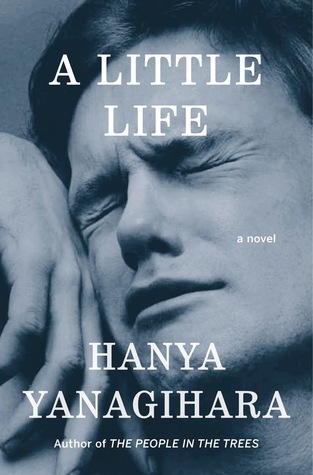
A Little Life


22822858

Just finished reading the book "A Little Life" by Hanya Yanagihara, and feel the need to write something while it's still fresh in my mind..... although it may remain "fresh" forever.

This is not a book for the timid, the impatient, or those who like happy stories with happy endings. At 720 pages, it takes some endurance to read and, with every new chapter, we learn a bit more about lives - and especially one life - that are filled with tragedy and abuse almost beyond comprehension. As such, this is a graphic story about the corruption of our human spirit, and it sometimes takes courage just to turn to the next page.

But it is also a story about the power of friendship and love to heal some of the damage that is brought upon us, that we bring upon each other, and that we bring upon ourselves too..... (but the damage we do to ourselves is the hardest to heal.)  I want to believe that true love and friendship, when fully given and received, can heal all wounds.  As the main character's adopted father tells his adopted son:

“You won’t understand what I mean now, but someday you will: the only trick of friendship, I think, is to find people who are better than you are—not smarter, not cooler, but kinder, and more generous, and more forgiving—and then to appreciate them for what they can teach you, and to try to listen to them when they tell you something about yourself, no matter how bad—or good—it might be, and to trust them, which is the hardest thing of all. But the best, as well.” 

But, while many, many wounds are healed through amazing expressions and relationships of love in this book, some are not.  I cried over and over again, both for the damage done and for the healing love..... but mostly for when the damage was too great, where even love was not enough.

I think this book is about our own lives, on steroids so we don't miss what is more muted in our own day to day, so we can more clearly see the ways in which our lives connect and collide with each other in both damaging and healing ways, so we might choose to heal and love as much as we can.

Monday, October 19, 2015

Brokenness and Love

Between the searching and the need to work it out
I stop believing everything will be alright
Broken
We are broken
I'm walking uphill being turned around and round
Secret in motion when my feet are on the ground
Broken
We are broken
In my mind's eye
One little boy anger one little man
Funny how time flies
"Broken"
Tears for Fears


How are we to understand and respond to these recent tragic shootings in our world?  What are we to do to protect ourselves from further and future harm?  Polarized political positions that present themselves as mutually exclusive when democracy depends on compromise only add fuel to a fire that has already burned too long….. and I feel the heat rising.

With each new shooting, both sides use the tragedy as evidence to support their intractable stances in a standoff debate while obscuring the deeper truth that the real problem is not in our having too many or too few guns.

The real problem is us…….

The Bible tells us that “hardship does not spring from the soil, nor does trouble sprout from the ground.  Yet man is born to trouble, as surely as sparks fly upward” (Job 5:6-7).  Looking for something or someone outside ourselves to blame, we fail to see that the brokenness out there in the world is nothing more, and nothing less, than the brokenness within us, writ large. 

If we only see the brokenness of the world “out there” without acknowledging the brokenness of the world "in here,” inside ourselves, we can never really understand.  And, in the absence of knowing this brokenness personally, we are doomed to living in the fear of that which we do not understand.

But, when we acknowledge our common human condition, our common capacity for both good and evil, both light and darkness; when we acknowledge that there were 10 tragic losses of life and not 9, embracing our common future and common fate in a world that is unavoidably ours to share, then – and only then – can we see our way forward, see our way out.  For the answer to darkness in not more darkness, nor is the solution to meet violence with more violence.  Instead, the only “force” that can bring light to the darkness and healing to the brokenness that is both within and without, is love.

Not a Pollyannaish Love, not a Hallmark Card Love, but instead……………

A love that holds a person accountable, but more as a son than an enemy

A love that reaches out with friendship so that no one’s thoughts can lead them to a sense of isolation or abandonment

A love that reaches out with generosity so that no one’s poverty can lead them to desperation

A love that reaches out with forgiveness so that no one believes themselves to be beyond help, or hope

A love that reaches out with balm for body and mind because no one is beyond healing

A love given to enemies as if they were friends, a love given to others as we would want to be loved ourselves


Because, when we really know the brokenness, and when we really know the power of love given or withheld, we will at the same time know that the heaven or hell of this world is of our own making.


Tuesday, September 15, 2015

At Our Best

So here I am, sitting in a folding chair on the putting green at Mallard Creek Golf Course, writing my monthly President’s Report during my break between my welcome and closing comments while everyone else is playing 18 holes of golf at our LBCC Foundation Annual Golf Tournament.  In front of me are a couple of large lawn tents under which we will have our closing luncheon and program at somewhere around noon, while off to my right is the burned out shell of the lodge that was supposed to be there for us….. but now isn’t.

Stuff happens (there’s another way of saying this that perhaps makes for a more powerful statement but, for my purposes here, the word “Stuff” will suffice).

Buildings burn down, budgets are cut, adversity comes from unexpected places, the sun clouds over and the rains fall.  This is the “Stuff” that happens and, for some, this is the stuff that defeats.  But here I am at a golf tournament fundraiser that feels more like a family event because the challenge of pulling this off has pulled us closer together….. players and sponsors and volunteers and golf course staff all together because it isn’t really about the game or the prizes or the lodge that is a total loss.  Instead, we gather on this beautiful crisp morning because we believe in the difference that a particular community college makes in students’ lives and in the communities that are ours to share. 


Over this summer I finally had the time to read Malcolm Gladwell’s most recent book, David and Goliath, and in it I saw the characteristics that I think contribute to LBCC’s success: the right size for being nimble and quick on our feet, a passionate sense of why we are here, and a willingness to draw together when “things” happen.  Like a golf tournament that rises to the challenge and finds something deeper and wider than just a game, like David who defeats Goliath because he believes in something more than Goliath does, we at LBCC find our success not in our circumstances but in our character.  And it is in this realization that we are at our best.

Friday, February 13, 2015

Outcomes Funding and Mission: How We Can Move the Dial on 40-40-20


In October of 2001, Jim Collins published his most popular book to date, Good to Great: Why Some Companies Make the Leap….. and Others Don't, describing and demonstrating for us some of the critical ways in which organizations can successfully adapt and advance in a rapidly changing technological, economic, and social environment.  But, with numerous examples of the successful implementation of these principles in corporations across the USA and even across the world, I and many others have nonetheless wondered about their application to the not-for-profit and social sector.

Like most of us, I have read Collin’s book but, more recently, I also had the opportunity to meet and discuss with him some of the principles for great organizations that he presented in his book, and it was on this question of applicability to the social sector – and especially to education – that we focused our conversation.  Collins referred us to his 2005 Monograph, a supplement to his book Good to Great entitled Good to Great and the Social Sectors, wherein he noted a number of ways in which public colleges differ from for-profit businesses, two of which I want to focus on here: Differences in Leadership, and Differences in the Relationship Between Mission and Money.

Differences in Leadership

  • Whereas the CEO of a for-profit business has the power to make and implement any decision she chooses (what Collins calls “Executive Leadership”), the power of a college President is more contingent upon internal ownership and support (“Legislative Leadership”).  For a college to change its direction, sense of purpose, goals, or even the processes by which those goals are pursued, a president must engage in and attempt to steer the formal and informal community convenings and  conversations by which such decisions are given efficacy.  Bargaining, leveraging, and negotiating trade-offs are all part of being a president, but the true power of this role comes in being able to tell stories and form images that capture and then coalesce the emotional energy of those who make up that community, that college.  Always messy, always incomplete, this nonetheless is the work of the effective legislative leader. 

Differences in the Relationship Between Mission and Money

  • Whatever else may be the “mission” of a for-profit business, making money is at the core of this purpose.  Money is “invested” with the explicit expectation that money will be made – Return on Investment (ROI).  But, for the not-for-profit, Mission is almost never connected to money, making the connections between “investment” and “mission attainment” much more difficult to effect, or even discern.  ROI becomes a much more complicated calculation.

So, what does all this have to do with Outcomes Funding?  Well…………

Outcomes Funding is most often presented in terms that reflect a belief in what academics call Resource Dependency Theory – the idea that changing the sources and configurations of financial inputs will result in an organization’s adjustment of external coalitions and internal practices in order to stabilize and maximize these financial inputs.  This makes intuitive sense and, for the most part, seems to hold true when we look at for-profit businesses: Companies DO adapt to maximize profits, ROI.

But, when we try and apply this principle to the not-for-profit/Social/Education sectors, the dynamics of Resource Dependency Theory in general and, I believe, Outcomes Funding in particular, begin to break down.  And here’s why……

Resource Dependency Theory is explicit in its recognition that its impact is limited to BEHAVIORS and not BELIEFS.  Changes in Resources will tend to have the effect of changing the Standard Operating Procedures (SOPs) of an organization in order to stabilize and maximize the benefit from these changes in Resources, but it will have little or no effect on the “deeper processes” of an organization, such as its sense of purpose, or Mission.   Of course, for organizations where profit – or ROI – IS the purpose, this does not create any problems, any conflict.  In fact, for these organizations, Resource Dependency Theory actually EXPLAINS the relationship between Mission and organizational behavior.  But for the not-for-profit where Mission has nothing to do with profit (as Collins notes in his 2005 Monograph), such organizational manipulation via changes in resources often creates a tension between Practice and Purpose and, even when  you are successful in changing SOPs, the efficacy of these changes is severely limited by  that tension.  In short, you cannot effectively incentivize an organization to accomplish something that it does not believe in. 

So, what can we do to “move the dial on 40-40-20”?  I believe the answer lies in the work of Simon Sinek, author of the 2011 book Start With Why.  As he suggests, in order to make effective and lasting change in an organization, you have to start by asking – and answering – the question of WHY that organization exists.  What is its Purpose; What is its Mission?  And, as Collin’s work suggests, answering these questions for the not-for-profit organization is NOT accomplished by edict, administrative decision, or legislative mandate.  Instead, it takes the kind of “legislative leadership” that focuses on capturing and then coalescing the emotional energy of those who make up that organization, that tells stories and forms images that make it possible for the organization’s members to gather around a Purpose that they believe in enough to pursue.  (If you doubt the need for this affective approach to organizational change, I’d like to suggest you read some of Jonathan Haidt’s work, especially his most recent book, The Righteous Mind: Why Good People Are Divided by Politics and Religion (2013).) This is hard and difficult work.  But I believe that, when given the guidance, support, and time necessary, our college presidents can lead what I refer to as the “Passionate Persistence in the Pursuit of Purpose” that is essential to our collective success.  But we have to “Start with Why” and not with “What” or “How.”

In the end, when we together do the hard work of forming a collective Purpose that reflects a commitment to 40-40-20, then Outcomes Funding becomes not an incentive to do something we might not otherwise do but a resource that enables us to pursue something we already believe.  And this is how we will experience success.


Monday, October 6, 2014

Educational Pathways and Destinations: Journeys that We Share


Let’s be honest…….  As much as we might encourage our students to have a clear sense of purpose and direction as they try and navigate their educational pathway – and we SHOULD encourage this! – we all know that their reality can quite frequently be a meandering route to destinations not yet fully known.   This “wandering” describes two recent community college graduates, and two of my best friends……  Chris, and Chris.

Chris #1 is a graduate of Clatsop Community College; AAS in Historic Preservation and Restoration.  But that’s not where he started.  Chris’ pathway includes a year at Central Oregon Community College with no specific degree in mind, two separate stints at OSU in pursuit of a Forestry degree, and then finally a completion at Clatsop.  Post-graduation, Chris has frequently availed himself to the Small Business Development Center (SBDC) services here at LBCC and he now owns his own historic window restoration company here in Albany.  Chris also works as a part-time faculty for the program at Clatsop from which he graduated.

Chris #2 is a graduate of Central Oregon Community College; AGS.  But he started at Clatsop Community College, pursuing a degree in Criminal Justice.  While attending there, Chris was working as a volunteer fireman and so, when the Criminal Justice path didn’t seem to be working out, he changed directions to focus on an Emergency Medical Technician (EMT) certificate and a degree in Fire Science.  He completed the EMT and then transferred to Central to pursue his Fire Science degree.  Close to what would have been the final term of his program Chris again changed direction, gathering what he had already completed into an Associates of General Studies and then transferring to an on-line Bible College, from which he will receive his Bachelor’s degree in just a few months.  Chris now works as an Assistant Pastor for a church in Bend.  

Last weekend, these two young men joined me at my place outside Randle, Washington to help me take down a large maple tree that was diseased and dying.  As I spent this time with them, grateful for their help AND for the tree felling skills they have acquired through their firefighting and forestry backgrounds, I became deeply mindful of the powerful bond that has developed between them and me over the past decade.  And I saw in these bonds the role that my life has played in their successful, albeit circuitous, educational journey.  


While Student Success and Completion will and must most certainly involve well-designed pathways, quality instruction and effective guidance & services, all organized around clear and compelling goals, at the core of our students’ success will be the relationships we are willing to share with them.  In our classrooms, in our offices, in the LBCC Courtyard and in the Communities around us, our personal involvement in their lives plays a critical role in their journey, and in their arrival at a destination that makes the difference in their lives that they seek, and we seek for them.

Monday, November 25, 2013

I Built A Sauna


Over the past couple of months I have finally taken on and completed a project I have thought about and procrastinated on for years….  I built a sauna.  8’ x 10’ with a small porch, wood-fired stove, and an interior complete with cedar benches and tongue-and-groove paneling, it’s pretty much everything I (and my sauna-loving friends!) dreamed of…..

And, in the process of building my sauna, I discovered something that once eluded me but now seems so self-evidently clear…. Saunas are not “built;” they are formed.  Formed out of the collective human labor of those who construct it, formed out of the collective human sweat of those who bathe in its heat.  Formed, because at its very essence, a sauna is not a building or a room but instead, a community.  And, more often than not, a community of men.

I didn’t understand this until my friend Chris and I began to build, and I began to read a book he loaned me, The Sauna, by Rob Roy.  Yes, the book is all about the varieties of construction methods employed to build these peculiar little places made sacred by the Finns.  But, behind all of the details about cord wood, stone, sod, glass and cast iron and heat, the book is really about a relationship that develops between the people and the space of their creation….  and about the relationships that develop out of that created space being shared. 

This understanding was confirmed when I was then introduced to a PBS documentary movie entitled Steam of Life .  A couple of on-line film synopses:
:
From a land of long, dark winters comes Steam of Life, a moody, comic and moving study of Finnish men as framed by the national obsession with the sauna. There, they come together to sweat out not only the grime of contemporary life, but also their grief, hopes, joys and memories.

Both physically and emotionally naked, the sweaty men talk in detail about their experiences, their ambitions, their failings, their darkest secrets and biggest fears, often with a few drinks handy to keep the conversation flowing. The result is a film that offers a look into a unique side of Finnish culture as well as an insight into the male psyche that's universal.

Could my sauna be a place such as this?  Could such a space help even we American men to reconnect to our common humanity, to our common destiny, and to each other?  Perhaps, with this in mind, one of the film’s viewers posted this comment: “May I suggest that Congress, the Senate, and the Administration might benefit from taking weekly communal saunas.”

Amen……

You can view the trailer to Steam of Life at http://www.pbs.org/pov/steamoflife/.